
The Montessori kindergarten program is renowned for its distinctive approach to early childhood education. By focusing on the child’s natural curiosity and emphasizing hands-on learning, Montessori schools create a unique environment for developing foundational skills. This article explores the various facets that make a Montessori kindergarten different from traditional programs.
What is the Montessori Method?
The Montessori Method, developed by Dr. Maria Montessori over a century ago, is a child-centered philosophy of education. It emphasizes the importance of forming a partnership between the child, the teacher, and the environment. This approach allows children to work at their own pace, fostering self-discipline, concentration, and a love of learning. Montessori educators believe that children are naturally driven to learn when provided with the right tools and freedom. Therefore, this method diverges significantly from the traditional teacher-led instruction found in conventional classrooms.
One of the most distinctive features of the Montessori Method is its focus on sensory-based learning. Children in Montessori classrooms are encouraged to engage with a variety of tactile materials designed to promote independent problem-solving and visual recognition skills. These materials are often self-correcting, allowing children to understand and learn from their own mistakes without direct intervention from the teacher. This hands-on approach helps to foster an intrinsic motivation to learn and a deep sense of responsibility for their own education. With this foundation, children develop critical thinking skills that are crucial for lifelong learning.
Montessori also emphasizes the importance of observation. Teachers, often referred to as guides, closely observe each child’s progress and interests, using this information to tailor the learning experience to meet individual needs. This is different from traditional settings, where the curriculum is often standardized, and progress is measured by the same benchmarks for every child. The Montessori approach values individual milestones and recognizes that each child follows a unique developmental path. This customization ensures that the learning experience is both challenging and rewarding for each student.
How Does the Classroom Environment Differ?
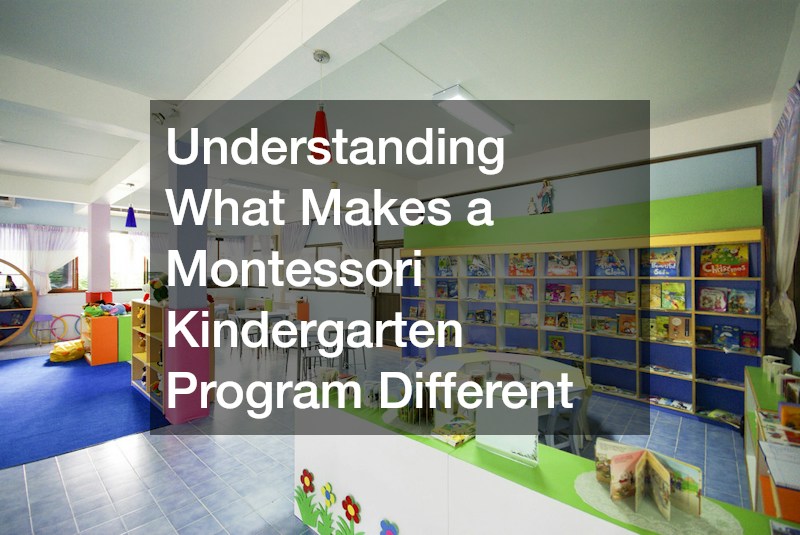
The Montessori classroom environment is meticulously designed to facilitate independence and foster a sense of order. Unlike traditional classrooms with rows of desks facing the teacher, Montessori classrooms are arranged to encourage mobility and freedom of choice. The environment is typically characterized by open spaces, child-sized furniture, and accessible materials. This setting allows children to explore various learning areas at their own pace. The effect is powerful: children feel empowered to make choices and take responsibility for their learning.
In a Montessori classroom, the emphasis is on creating a community where children support one another’s learning journeys. Mixed-age classrooms, a hallmark of Montessori education, play a crucial role in this dynamic. Older children naturally mentor younger peers, fostering a cooperative rather than competitive atmosphere. This interaction enables children to learn from one another and develop empathy and social skills. In a traditional setting, age-segregated classes often miss these valuable peer-to-peer learning opportunities.
Another aspect that sets the Montessori environment apart is its attention to fostering a connection with the natural world. Montessori schools often include outdoor classrooms and emphasize learning through interaction with nature. This approach not only enriches the curriculum with a sense of environmental stewardship but also helps children develop an appreciation for the world around them. By incorporating natural elements, Montessori classrooms support a holistic education that values both academic and personal growth. Such an environment is conducive to nurturing well-rounded individuals.
What is Unique about the Montessori Curriculum?
The Montessori curriculum stands out due to its comprehensive and integrated approach to learning. It covers a broad range of subjects, including practical life skills, sensorial activities, language, mathematics, and cultural studies. Each area of study is interconnected, providing children with a holistic understanding of the world. For example, learning about geometric shapes in mathematics might also involve exploring their cultural significance. This integrative method helps students see the connections between different fields of knowledge, enhancing their overall cognitive abilities.
A key component of the curriculum is its emphasis on real-world applications. Montessori education encourages children to engage in practical life activities, such as cooking, cleaning, and gardening, which develop fine motor skills, coordination, and independence. These activities prepare children for everyday life challenges and instill a sense of competence. This experiential learning contrasts with traditional curricula, which often prioritize theoretical knowledge over practical skills. By empowering children in this way, Montessori education shapes confident, self-reliant individuals.
Furthermore, the curriculum is intentionally designed to instill a love of learning. Montessori educators provide children with the freedom to choose their activities, which creates a learning environment that is both engaging and personalized. This approach nurtures curiosity and encourages exploration, fostering a lifelong passion for discovery. Traditional kindergarten programs often have rigid structures that limit this sense of agency. As a result, Montessori students typically exhibit a heightened enthusiasm for learning and a robust sense of personal accomplishment.
How Does the Montessori Approach Foster Independence?
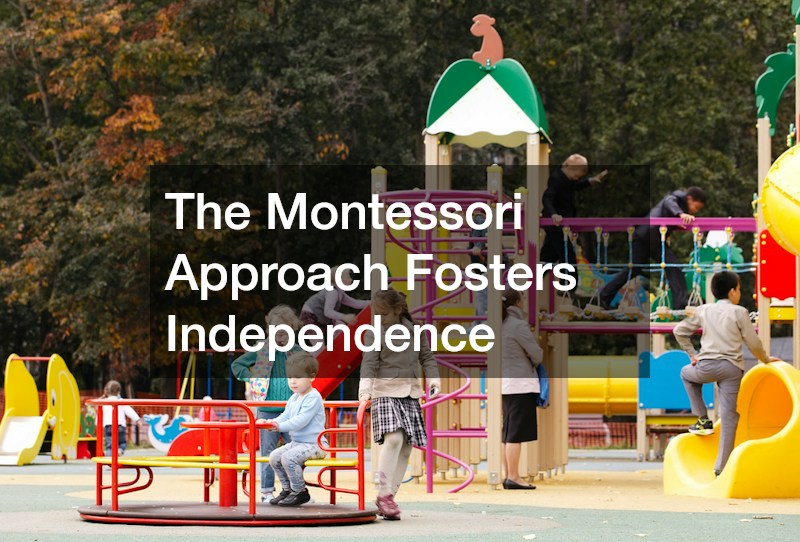
Independence is a cornerstone of the Montessori philosophy, and the approach is designed to enable children to become self-sufficient and confident learners. From the earliest age, children are encouraged to take an active role in their learning process. This autonomy is supported by an environment that provides the tools necessary for independent exploration. Educational materials are accessible and self-correcting, allowing children to work without constant adult intervention. This fosters a sense of responsibility and helps children develop self-reliance.
Montessori education recognizes that independence goes hand in hand with self-discipline. By giving children the freedom to choose, they also learn the importance of time management and goal-setting. Children are taught to work through challenges and persist in the face of difficulty, cultivating a growth mindset. This contrasts with traditional settings, where time and activities are often controlled by educators, potentially limiting opportunities for self-directed development. The Montessori approach instills a sense of ownership over one’s learning journey.
Another crucial aspect of fostering independence in Montessori is the development of problem-solving skills. Children are encouraged to think critically and explore solutions independently before seeking assistance. This empowers them to tackle obstacles with confidence and adaptability. In traditional settings, problem-solving is often guided by the teacher, which may hinder the development of independent thinking. The Montessori environment celebrates the process of learning from mistakes, which is vital for building resilient individuals capable of navigating an ever-changing world.
What are the Benefits of Montessori Education?
Montessori education offers numerous benefits that extend beyond academics, preparing children for all aspects of life. By focusing on the whole child, Montessori schools cultivate social, emotional, and intellectual growth. Children learn to collaborate, communicate, and appreciate diversity in their classrooms. This creates a strong foundation for positive social interactions and empathy. In contrast, traditional education often prioritizes academic achievement over social skills development, which may not fully prepare children for real-world challenges.
Furthermore, Montessori education contributes to the development of self-motivation and the ability to set personal goals. The freedom to choose and pursue interests fosters intrinsic motivation and encourages lifelong learning. Children learn to evaluate their progress and take pride in their achievements, laying the groundwork for self-determined success. Traditional settings may measure success with standardized benchmarks, overlooking individual growth and motivation. This intrinsic motivation is a key differentiator in Montessori education, promoting a love for learning that lasts beyond the classroom.
Finally, one of the most significant benefits of a Montessori education is its adaptability to different learners. Because it tailors the experience to each child’s unique needs, it can accommodate a variety of learning styles and paces. This inclusivity creates an accepting community where all students can thrive. In comparison, traditional education often employs a one-size-fits-all model that may not address the diverse needs of students. The Montessori method recognizes the individuality of each child, ensuring a supportive and empowering learning environment for all participants.
Montessori kindergartens set themselves apart through their structured yet flexible approach to learning. By respecting each child’s individual growth and fostering a love for learning, they provide an enriching environment that extends beyond traditional educational metrics. This comprehensive understanding of alternative education priorities enables parents to make informed decisions about their child’s early learning experiences.